The following information was obtained from the Cancer Association of South Africa (CANSA) Smoking Infographic (https://www.cansa.org.za/files/2016/05/Smoking-Infographic.pdf)
Did you know?
- 600 000 non-smokers are killed globally every year by being exposed to second-hand smoke.
- Tobacco use increases the risk of cancer of the lungs, esophagus, mouth, bladder, pancreas, kidney, stomach, prostate, cervix, and breast.
- Tobacco-related diseases kill over 44 000 South Africans and nearly 6 million people worldwide annually, that is, one person every six seconds which amounts to 1:10 persons in the world.
- Smoking causes over 18 types of cancer: cancers of the lung, bladder, renal pelvis, oral cavity, oropharynx, hypopharynx, esophagus, larynx, pancreas, nasopharynx, nasal cavity and sinuses, stomach, kidney, ureter, uterine cervix, myeloid leukemia, colorectal, and ovary.
Economic Impact of Smoking
Tobacco use costs national economies enormously through increased healthcare costs and decreased productivity. It worsens health inequalities and exacerbates poverty, as the poorest people spend less on essentials such as food, education and health care.
“The tobacco industry produces and markets products that kill millions of people prematurely, rob households of finances that could have been used for food and education, and impose immense healthcare costs on families, communities and countries” – Dr Oleg Chestnov, WHO’s Assistant Director-General for Noncommunicable Diseases (NCDs) and Mental Health
What is in your smoke?
Cigarettes
Tobacco and second-hand smoke contain over 1400 dangerous and harmful chemicals and 81 cancer causing chemicals have so far been identified in cigarettes.
Some of these are:
- Acetone – paint stripper
- Ammonia – toilet cleaner
- Arsenic – rat poison
- Butane – lighter fluid
- Carbon monoxide – exhaust fumes
- Naphthalene – mothballs
- Phenol – disinfectant
Hubbly-Bubbly
Waterpipe smoke contains over 300 dangerous and harmful chemicals and 27 cancer causing chemicals have so far been identified in hookah.
Some of these are:
- Arsenic – rate poison
- Carbon monoxide – exhaust fumes
- Formaldehyde – building materials
- Lead – batteries
- Nicotine – cigarettes
- Tar – toxin
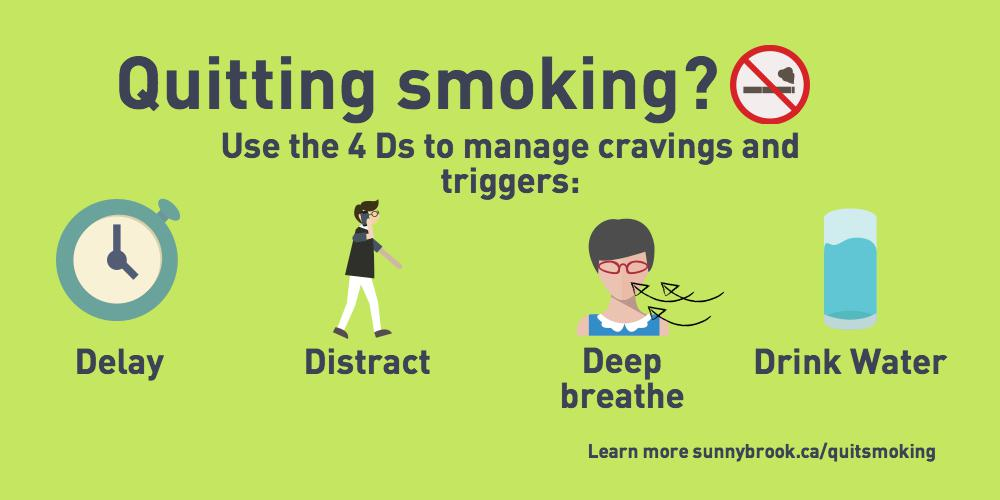
Time To Quit
Quitting tobacco can have a positive effect on your health and lifestyle:
- Reducing the cancer risk
- Lowering heart rate and blood pressure
- Breathing better
- Being able to walk without shortness of breath
- Living a longer and healthier life
- Having more physical energy
- Being a good role model for children and youth
Timeline of Quitting Smoking
- 20 minutes after last cigarette: blood pressure and pulse rate drops; body temperature rises toward normal.
- 8 hours after quitting: carbon monoxide level in blood drops to normal; oxygen level rises to normal.
- 24 hours after quitting: chance of a heart attack decreases.
- 48 hours after quitting: nerve endings start regrowing; ability to smell and taste is enhanced.
- After 2 weeks to 3 months: circulation improves; walking becomes easier; lung function improves.
- After 1 to 9 months: decrease in coughing, sinus congestion, fatigue, shortness of breath
- After 1 year: excess risk of coronary heart disease is decreased to half that of a smoker
- After 5 to 15 years: stroke risk is reduced to that of people who have never smoked
- After 10 years: risk of lung cancer drops to as little as one-half that of continuing smokers; risk of cancer of the mouth, throat, oesophagus, bladder, kidney, and pancreas decreases; risk of ulcer decreases
- After 15 years: risk of coronary heart disease is now similar to that of people who have never smoked; risk of death returns to nearly the level of people who have never smoked.